framing
The LAC now offers a variety of custom matting and framing services. If you are interested in having artwork or collectibles framed, please read this page and see our FAQ section below for more information.
Types of Items Framed
- Original Artwork on Paper (Oil, Acrylic, Watercolour, Drawing, etc.)
- Original Artwork on Stretched Canvas Frame (Oil, Acrylic, Mixed Media, etc.)
- Artwork Print or Photograph (Lithograph, Silkscreen, Serigraph, Etching, Giclée, etc.)
- Memorabilia/Collectible on Paper (Newspaper, Stamps, Sports Card, Poster, Autograph, Comic Book, etc.)
- 3D Item (Jersey/Sports Equipment, Baby Shoes, Medal, Vinyl Record, etc.)
- Personal Item (Letter, Diploma, Concert Tickets, Souvenirs, etc.)
Types of Framing Services
- Full Conservation framing will include acid-free rag (cotton) mats, frame, sealing tape (with a pH neutral adhesive), and an acid-free backing paper (dust cover.)
- Archival or Conservation framing uses a floating, acid-free mount that can be completely undone without affecting the artwork or collectible. Dry and wet mountings are permanent processes that are not suitable for archival framing projects.
- Standard framing uses common materials for general presentation and display only. This is the most economical method.
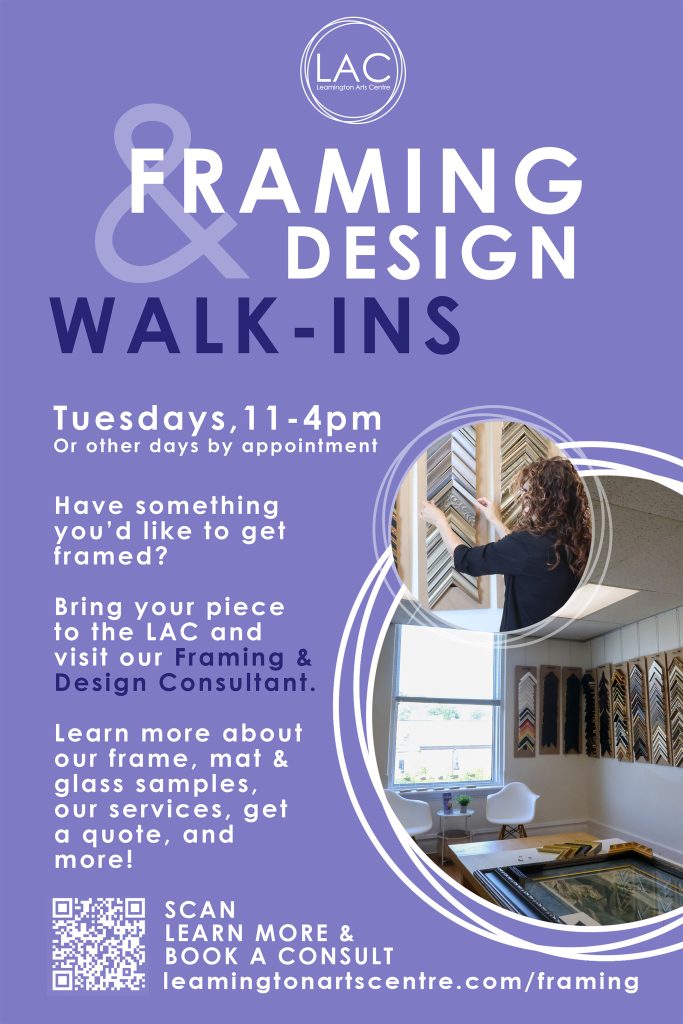
Have an item to be framed?
Walk-ins are available Tuesdays from 11-4pm. Consultations on other days are available through appointment only.
Please complete the inquiry form below and our Framing & Design Consultant will get back to you to set up appointment and provide options and estimates.
All consultations and estimates are FREE.
Questions?
For general questions not listed in our FAQ section, please contact:
framing@leamingtonartscentre.com
Discounts?
Yes! The LAC offers 10% off all orders for current members. Bulk discounts available for artists looking to have multiple works framed for an exhibition.
FAQ
Where are you located?
The Framing & Design Rooms are located on the 2nd floor of the LAC. Take the stairs or the elevator (if during gallery hours), and head to through the hallway to the East side of the building at the end of hall (signs will guide you). The Framing & Design showroom with viewable sales is open to all visitors during gallery hours. So please pop in and have a look, take a brochure and tell a friend!
What are the service terms?
Once materials are selected and ordered, a 50% deposit is required. Once the job is complete, the balance is due in full. We accept debit, credit, and cash.
Refunds are not accepted since all jobs are custom and special orders. However, our team will work with you to be sure you are satisfied.
All estimates are valid for 30 days.
What are the benefits to having my artwork or collectible framed?
Framing art and collectibles offers benefits in terms of protection, aesthetic enhancement, and presentation, while also preserving value over time. It shields art and collectibles from environmental factors like dust, UV light, and humidity, and allows for easier display. A well-chosen frame can also elevate the artwork by highlighting its colours, textures, and composition, and can reflect personal style. Many galleries will also require artwork to be framed for exhibitions.
What is harmful to my art or collectible?
Sunlight (UV rays from your window), pollutants (ozone, nitrogen gasses, dust), Insects (termites, woodworms, silverfish), humidity (moisture and seasonal temperature and humidity changes), lignum (wood fibres).
Paper art shouldn’t be touched with bare hands. The natural acids found in hands can break down the surface of your artwork or collectible.
Acid-free (pH neutral) framing materials should always be used when condition and longevity are desired.
Art on paper is not a flat media and should not be expected to maintain a flat surface. Paper reacts to environmental changes; it expands and contracts with temperature, humidity, or seasonal weather changes, and in the process may become wavy.
How to choose a qualified and trusted framer?
Choosing a good framing establishment could make the difference between a poor job that may need to be redone at a later date, or a professional framing job that is completed with skill, craftsmanship, care, preservation and will last for years to come.
What affects the cost of a framing estimate?
Quality of materials and time. However, the cost of framing is dependent on many more specific factors such as but not limited to: size, choice of matting, number of mats, type of glass and UV protection, frame material and detail, type of mounting, and time.
Why is custom framing more expensive?
There is a difference between “customs framing” and “ready-made frame kits” Ready-made frames are mass produced using lower grade materials and often plastics. They typically do not contain archival materials such as 100% acid-free mat boards, or UV protective glass. The thickness and transparent quality of the glass is also usually inferior and more prove to breakage. A mass produced frame will not protect the artwork or collectible and can also increase the risk of damage and deterioration of the framed item.
What should I prepare and what do I need for my in-person framing consultation?
Bring the item with you so our design consultant can see the item, to provide the most suitable framing options. Be prepared to discuss colours, styles, and your framing budget.
How long does a consultation take?
All appointments vary based on the scope of the work and client’s preferences and needs. If a client has a good idea of what they are looking for, and less variations need to be looked at and quoted, the expect about 20-30 minutes. If a client is unsure and has never had an item framed before, a consolations could take an hour.
Once I choose my materials, how long will my item take to be framed?
Each job is unique and different, and will depend on materials available and special ordering time. However, on average most framing jobs will take about 2-3 weeks to complete once the order is placed.
I am an artist, can I use your equipment to frame my own work?
Sorry, while we love to work with artists and support artists… that’s why we do what we do, we do not offer DIY services. We can offer mat board, glass, and frame materials for purchase to help artists save funds.
I am preparing for an art exhibition, do you offer bulk rates?
Yes, we would be happy to work with you to complete a series of frames for you to display.
Framing Inquiry Consultation Booking Form
For framing inquiries, the first step is to complete the intake form below.
You will receive an online confirmation as well as an email confirmation.
After we review, our Framing Design Consultant will be in touch with you to set up an appointment to come in with your item to show samples and discuss options, as well as providing an estimate.